
Precision Gear Hobs | High-Performance Hobbing Tool
Premium Gear Hob Cutters and Tools Engineered for Precision, Performance & Long Life in Industrial Hobbing Applications
✅ Delivered with Accuracy – Vacuum Heat Treated for Longer Life
What are Gear Hobs?
Gear hobs are precision cutting tools used in the gear hobbing process to manufacture accurate gear teeth for industrial applications. These cylindrical, multi-tooth cutting tools rotate in synchronization with the gear blank, enabling continuous and efficient cutting of spur, helical, spline, worm, and timing gears with high precision.
Manufactured from premium high-speed steel grades such as HSS M2, M35, and ASP materials, gear hobs are designed to deliver superior cutting performance, longer tool life, and consistent tooth profiles. They are widely used in automotive, aerospace, power transmission, robotics, and heavy engineering industries where reliable gear production is essential.
Key Advantages of using Gear Hobs
● High Precision: Ensures accurate tooth profiles with excellent repeatability.
● Faster Production: Continuous cutting process improves machining speed.
● Long Tool Life: Premium HSS materials offer superior durability.
● Wide Compatibility: Suitable for spur, helical, spline, and worm gears.
● Cost Efficient: Reduces machining time and overall production costs.
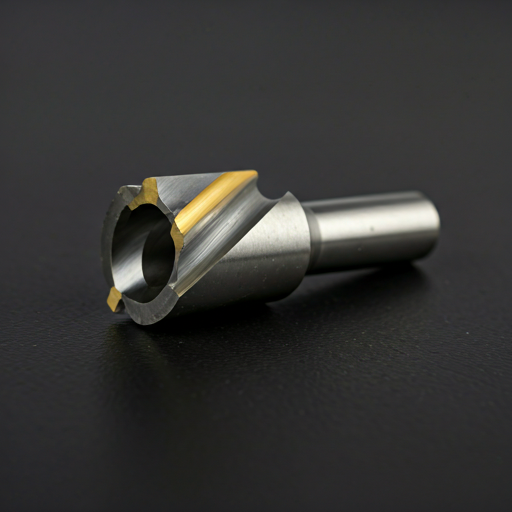
Types of Gear Hob Cutters Available
We offer a complete range of gear hob cutters engineered for precision hobbing – from straight and helical gear hobs to spline, worm, and timing pulley hobs.
Straight Gear Hobs
For spur gear applications
Helical Gear Hobs
For angled tooth profiles
Spline Hobs
For shafts & internal/external splines
Worm Gear Hobs
For high torque transmission gears
Timing Pulley Hobs
For belt-driven systems
Gear Hob Specifications – Engineered for Accuracy & Durability
Explore our complete range of high-speed steel gear hobs, optimized for long tool life and flawless gear cutting.
| Parameter | Specification Range |
|---|---|
| Module Range | 0.5 to 25 Module |
| Pressure Angle | 14.5°, 20°, 30° (Custom available) |
| Number of Starts | Single, Double, Multi-start |
| Profile Type | Full Form / Semi Topping / Non-Topping |
| Material | HSS M2, M35, M42, ASP 2030 |
| Coating Options | TiN, TiAlN, AlCrN, TiCN |
| Accuracy Class | Class AA / A / B (DIN 3968) |
| Direction of Cut | Right Hand / Left Hand |
| Shank Type | Bore Type / Shank Type / Hub Type |
| Diameter Range | Up to 250 mm |
| Face Width | Up to 100 mm |
| Application | Spur, Helical, Spline, Worm, Timing Gears |
| Lead Time | Ready Stock / 4–6 Weeks |
| Customization | Yes – Tailored to your machine & design |
Gear Hobbing vs Gear Shaping: Key Differences
Both gear hobbing and gear shaping are widely used gear manufacturing processes, but they differ in working principle, application scope, and production efficiency. Choosing the right process depends on gear hobs, volume, and machining requirements.
Gear Hobbing
- Continuous generating process using a rotating hob and workpiece
- Best suited for external gears (spur, helical, spline)
- High production speed and efficiency
- Ideal for large batch manufacturing
- Limited capability for internal gears’
Gear Shaping
- Reciprocating cutting process using a gear-shaped cutter
- Suitable for both external and internal gears
- Slower compared to hobbing due to the interrupted cutting motion
- Preferred for complex geometries and internal gear profiles
- Better for low to medium production volumes
Material & Coating Technology
The performance of gear hobs is directly influenced by material composition and coating technology. Selecting the right combination ensures optimal cutting efficiency, thermal stability, and extended tool life under varying machining conditions.
HSS M2 Gear Hobs
- Suitable for general-purpose gear cutting
- Balanced toughness and wear resistance
- Cost-effective for medium production volumes
HSS M35 (Cobalt Alloy)
- Higher heat resistance due to cobalt content
- Ideal for harder materials and higher cutting speeds
- Improved tool life compared to M2
ASP 2030 (Powder Metallurgy HSS)
- Superior wear resistance and edge retention
- Best for high-speed CNC hobbing and mass production
- Excellent performance in dry machining conditions
How Do Gear Hobs Work?
Gear hobs work through a continuous cutting process in which the hob and the gear blank rotate together in a fixed, synchronized ratio. This coordinated motion allows the hob to gradually shape and form accurate gear teeth.
As the hob rotates, its multiple cutting edges remove material step by step. At the same time, the tool moves across the gear blank, ensuring the entire tooth profile is generated smoothly and evenly. Unlike traditional methods that cut each tooth individually, gear hobbing creates the full gear profile in one continuous operation.
How the Process Works
● The hob and gear blank rotate together in sync
● Cutting edges engage progressively to remove material
● The hob moves across the gear width to complete the teeth
●The gear profile is generated through continuous motion

Why Engineers Choose Maxwell Tools for Gear Hobs
Maxwell Tools gear hobs are designed to maintain precision, extend tool durability, and lower overall machining costs. By focusing on metallurgy, high-accuracy production methods, and tailored tool design, engineers achieve consistent output and dependable performance across demanding operations.
DIN 3968 Accuracy Standards (Class AA & A)
These gear hobs meet strict DIN 3968 standards, ensuring highly accurate tooth profiles. This level of precision helps maintain consistency across large production runs. Engineers benefit from reduced errors and minimal need for rework. It also improves the overall quality of finished gears.
Advanced Coatings for Longer Tool Life
Maxwell Tools uses coatings such as TiAlN and AlCrN to withstand high temperatures. These coatings reduce wear during continuous cutting operations. As a result, the tools last longer and maintain performance over time. This helps lower replacement frequency and operating costs.
Wide Module Range up to 25
The gear hobs support a wide module range up to 25, making them suitable for a wide range of applications. This flexibility allows engineers to use the same supplier across different projects. It also simplifies tooling decisions in complex manufacturing setups. From small to large gears, the range covers it all.
Custom-Engineered Tool Solutions
Each tool can be designed based on exact gear specifications and machine parameters. This ensures a better fit for specific production requirements. Customization helps improve cutting efficiency and accuracy. Engineers can achieve more reliable results tailored to their setup.
Stable Performance in CNC Hobbing
These gear hobs perform consistently in high-speed CNC environments. They handle continuous operations without losing accuracy or stability. This is important for maintaining productivity in demanding workflows. The tools support smooth machining even under heavy loads.
Frequently Asked Questions
What is gear hobbing and how does it work?
Gear hobbing is a machining process used to cut gears using a rotating hob cutter. The workpiece and the hob rotate in a synchronized manner, allowing precise gear teeth to be cut. This method is widely used for producing spur, helical, and spline gears with high accuracy and efficiency.
Which type of gear hob should I choose for my application?
The choice depends on the gear type: use straight gear hobs for spur gears, helical gear hobs for angled teeth, spline hobs for shafts, worm gear hobs for worm wheels, and timing pulley hobs for toothed belt systems. Custom modules and profiles are available based on your requirements.
What materials are used to manufacture gear hobs?
Gear hobs are typically made from High-Speed Steel (HSS) or Carbide. HSS is preferred for general applications due to its toughness, while Carbide hobs offer superior wear resistance and longer life in high-speed or abrasive environments.
Can gear hobs be used on CNC machines?
Yes, gear hobs are fully compatible with CNC gear hobbing machines. CNC integration allows for higher precision, better repeatability, and more efficient production of complex gear profiles.
What is the difference between a gear hob and a gear cutter?
A gear hob is used in a continuous cutting process where all gear teeth are generated gradually, while traditional gear cutters typically cut one tooth at a time on a milling machine.
What types of gears can be made using gear hobs?
Gear hobs can produce several types of gears, including spur gears, helical gears, worm gears, splines, and sprockets.
What industries commonly use gear hobs?
Gear hobs are widely used in industries such as automotive manufacturing, aerospace engineering, robotics, industrial machinery, and power transmission equipment production.
Why is gear hobbing preferred in gear manufacturing?
Gear hobbing is preferred because it is a fast, efficient, and cost-effective process that can produce accurate gear teeth with consistent quality in high-volume production.
Can one gear hob produce different gear sizes?
Yes, a single gear hob can produce different gear sizes within a certain range depending on the module, pitch, and gear specifications.
What machines are used with gear hobs?
Gear hobs are used with gear hobbing machines, which can be manual or CNC machines designed to synchronize the rotation of the hob and the gear blank.
What is the difference between gear hobbing and gear milling (form cutters)?
Hobbing is a continuous generating process — faster and better for production.
Milling uses profiled form cutters to cut one tooth at a time with indexing — slower but more flexible for small batches or home shops.
What is the difference between single-start and multi-start gear hobs?
Single-start: Higher precision and better finish (recommended for accuracy).
Multi-start: Cuts faster (higher production) but slightly lower accuracy.
How do I choose the right gear hob?
Match these specs:
- Module (metric) or Diametral Pitch (DP – imperial)
- Pressure angle (14.5° or 20°)
- Gear type (spur/helical)
- Number of starts
- Hob material (HSS or carbide)
What is a Gear Hob Cutter Catalogue, and what information does it include?
A Gear Hob Cutter Catalogue provides detailed specifications of gear hobs, including module sizes, pressure angles, materials, coating options, and recommended applications. It helps manufacturers choose the correct gear hob for their gear cutting requirements.
Send Us Your Gear Hobs Requirements
Email us at [email protected] or click below to connect instantly.