
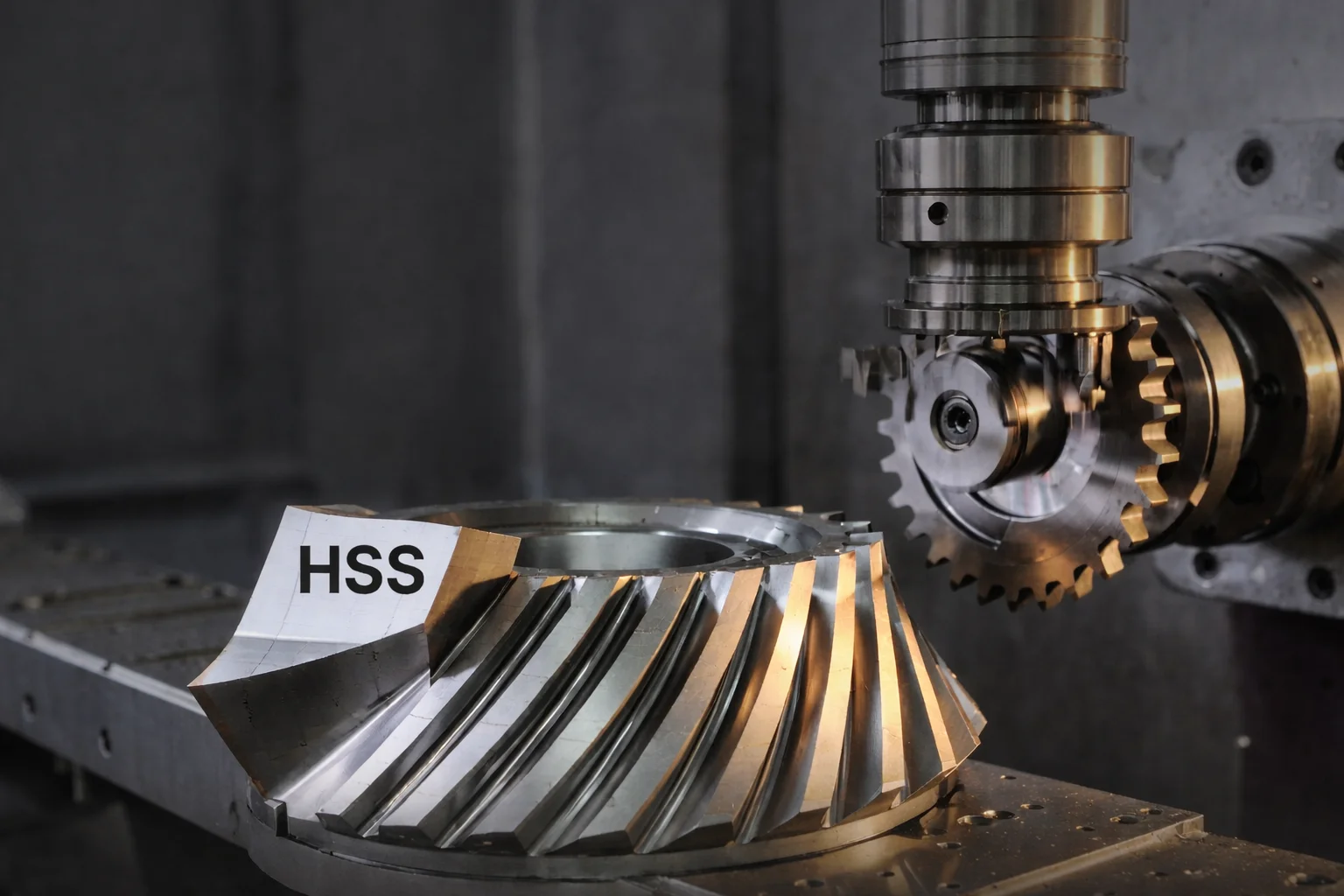
This guide explains how to choose the right involute gear cutter with clear steps, real-world factors, and no confusion. It also applies to selecting involute gear cutters across different applications.
Top 10 ways to Choose The Right Gear Cutters
Choosing the correct gear cutter is a technical task. Small mistakes can affect gear accuracy and life. You need to check multiple parameters before making a decision. The points below explain each factor in a simple and clear way.
1. Match the Module Correctly
The module defines the size of the gear teeth. It is the most important factor when selecting gear cutting cutters. If the module is wrong, the cutter will not form the correct tooth profile. Most involute gear cutter module 0.5 to 20 ranges follow this rule strictly.
- Check gear drawing for module value
- Use cutters labeled with the same module
- Avoid mixing the inch and metric systems
When the module matches, the tooth spacing stays correct. This ensures smooth meshing with mating gears. Always verify the module before checking anything else.
2. Choose the Right Pressure Angle
Pressure angle affects how gears transfer load. Common values are 14.5° and 20°. Most modern gears use 20 degrees because it offers better strength. This is why many manufacturers recommend the best gear cutter set for a 20-degree pressure angle.
- Confirm pressure angle from design specs
- Use only a matching cutter angle
- Do not substitute between 14.5° and 20°
A mismatch changes tooth shape and contact pattern. This leads to noise and fast wear. Always use cutters designed for the exact pressure angle.
Read this guide and buy the perfect cutter, every time.
3. Select the Correct Cutter Number in the Set
Involute gear cutter sets usually come in sets of 8 cutters. Each cutter handles a specific range of teeth. You must pick the correct number based on gear teeth. Maxwell Tools Company offers standard sets that follow these tooth range classifications.
- Cutter No. 1 → 135 teeth to rack
- Cutter No. 4 → 26 to 34 teeth
- Cutter No. 8 → 12 to 13 teeth
Using the wrong cutter gives an incorrect tooth curve. This affects gear meshing and efficiency. Always match the cutter number to the tooth count.
4. Check Gear Type Before Selection
Different gears need different cutters. Spur gears and helical gears are not cut the same way. Make sure you know the gear type before choosing.
- Spur gears use standard involute cutters
- Helical gears need an adjusted setup
- Bevel gears require special tools
Wrong cutter selection leads to incorrect geometry. This makes the gear unusable. Always confirm the gear type first.
5. Consider the Workpiece Material
Material affects cutter wear and cutting speed. Hard materials need stronger cutters. Soft materials need sharp edges for clean cuts.
- Steel needs HSS or carbide cutters
- Brass allows a higher cutting speed
- Cast iron needs wear-resistant tools
Choosing the wrong cutter reduces tool life. It also affects surface finish. Always match the cutter material to the workpiece material.
6. Choose Between HSS and Carbide
Gear cutters are mainly made from High-Speed Steel (HSS) or carbide. Each has its own use case. Your production needs will guide the choice.
- HSS is cheaper and easier to sharpen
- Carbide lasts longer at high speeds
- Carbide suits mass production
HSS works well for small batches. Carbide is better for long runs. Pick based on your usage, not just cost.
7. Check Machine Compatibility
Not all cutters fit all machines. Your milling machine must support the cutter size and mounting type. Always check the machine specification.
- Verify arbor size
- Check spindle speed range
- Confirm rigidity of setup
A mismatch can damage both tool and machine. It can also affect accuracy. Make sure your machine can handle the cutter properly.
8. Look at Cutter Accuracy Grade
Gear accuracy depends on cutter quality. Precision cutters produce better tooth profiles. This matters in high-performance applications.
- Use standard grade for general work
- Choose high precision for critical gears
- Check the manufacturer’s tolerance specs
Better accuracy improves gear life and performance. It also reduces noise. Always choose the right grade for your needs.
9. Evaluate Surface Finish Requirements
Surface finish affects gear efficiency. Rough surfaces cause friction and wear. The cutter plays a big role in finish quality.
- Sharp cutters give a smoother finish
- Coated tools reduce friction
- Proper feed rate improves results
A good finish reduces heat and noise. It also improves durability. Always consider finish when choosing a cutter.
10. Think About Production Volume
Your production size affects cutter choice. Small jobs need flexibility. Large jobs need durability and speed.
- Low volume → use HSS cutters
- High volume → use carbide cutters
- Automated setups need consistent tools
Choosing based on volume saves cost. It also improves productivity. Plan your cutter selection around your workload.
Conclusion
Choosing the right involute gear cutter requires precision. You must match the module, pressure angle, and tooth count. Then check the material, machine, and production needs. Each factor contributes to the final gear quality. Skipping even one detail can lead to poor results. A good selection improves performance and tool life. It also saves time and cost. Maxwell Tools Co. offers a wide range of gear-cutting cutters that meet standard specifications. When you choose carefully, your gears run smoother. That is the goal of proper gear cutting.
FAQs
1. What is an involute gear cutter used for?
It is used to cut gear teeth with an involute profile. This shape ensures smooth and consistent motion between gears.
2. Why are there 8 cutters in a set?
Each cutter covers a range of tooth numbers. This helps maintain the correct tooth shape for different gear sizes. You ensure accurate tooth geometry by selecting the cutter that matches your gear’s tooth count.
3. Can one cutter be used for all gears?
No. Each gear needs a specific cutter based on module and tooth count. Using a single cutter for all gears yields poor results. It also leads to incorrect tooth geometry. This can cause noise and poor load distribution during operation.
4. Which is better: HSS or carbide gear cutter?
HSS is good for small jobs and is easy to sharpen. Carbide is better for high-speed and large-scale production.