
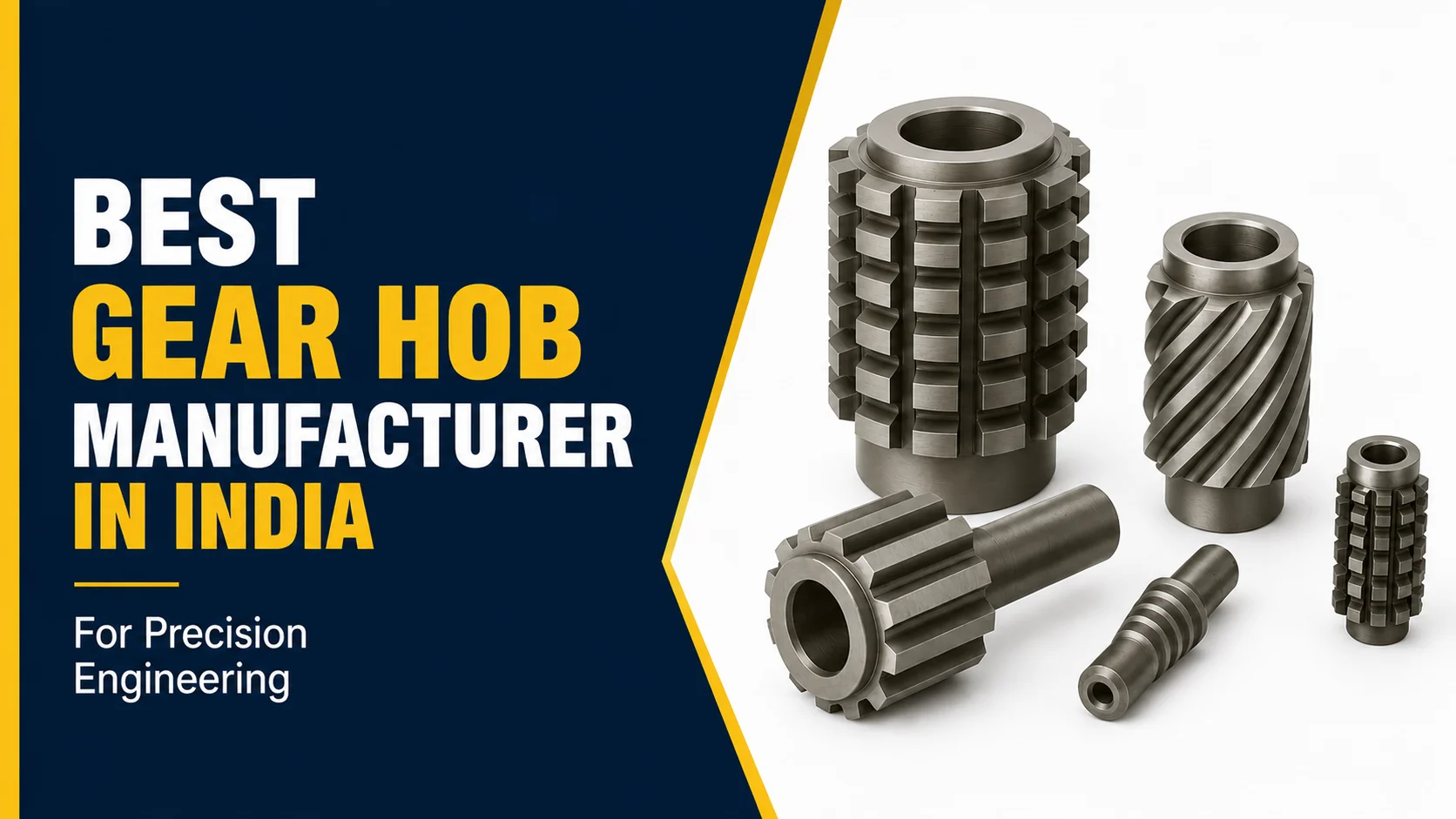
Precision matters in gear manufacturing. Even a small variation in tooth profile can affect machine performance, noise levels, efficiency, and long-term durability. That is why gear manufacturers and OEMs pay close attention to the cutting tools used during production. Among these tools, gear hobs remain one of the most important for producing accurate gears at scale.
India has become a strong manufacturing hub for industrial milling cutting tools, with many companies supplying gear hobs to automotive, aerospace, power transmission, and heavy engineering sectors. Still, not every manufacturer delivers the same level of consistency, metallurgy, or production quality.
This blog explains what makes a reliable gear hobs manufacturer, why material quality matters, and how precision-engineered gear hobs support modern manufacturing operations.
What Are Gear Hobs?
Gear hobs are cylindrical cutting tools used in the gear hobbing process. These tools cut gear teeth through a continuous generating motion where the hob and gear blank rotate together in synchronisation.
Unlike older methods that cut one tooth at a time, gear hobbing creates the full tooth profile in a smooth and continuous process. This improves speed, consistency, and accuracy.
Gear hobs are commonly used to manufacture:
- Spur gears
- Helical gears
- Spline gears
- Worm gears
- Timing pulley gears
Industries that rely on precision gear hobs include automotive manufacturing, robotics, industrial machinery, aerospace systems, agricultural equipment, and heavy engineering.
Why Precision Matters in Gear Cutting
Gears operate under constant pressure, friction, and load. Poor tooth geometry can lead to vibration, overheating, uneven wear, and mechanical failure.
Precision gear hobs help manufacturers maintain:
Accurate Tooth Profiles
Proper tooth geometry ensures smooth power transmission and stable machine operation.
Consistent Production Quality
High-accuracy tools reduce variation across large production batches. This becomes especially important in automotive and export manufacturing.
Lower Tool Wear
Well-manufactured gear hobs maintain sharp cutting edges for longer periods, reducing downtime and replacement frequency.
Faster Production Cycles
Efficient cutting performance helps reduce machining time without sacrificing quality.
What to Look for in a Gear Hob Manufacturer
Choosing the right gear hob manufacturer involves more than checking product catalogues. Manufacturers should evaluate technical capability, material quality, export standards, and production consistency before making a decision.
High Speed Steel Expertise
The quality of high-speed steel directly affects tool life and cutting stability.
Reliable manufacturers usually offer:
- HSS M2 for general gear cutting
- HSS M35 with cobalt for higher heat resistance
- ASP grade powder metallurgy materials for demanding CNC operations
The right material depends on cutting speed, workpiece hardness, and production volume.
Accuracy Standards
Precision engineering requires tools manufactured according to international accuracy standards.
DIN 3968 Class AA and Class A gear hobs provide better repeatability and tighter tolerances for demanding industrial applications.
Heat Treatment Capability
Vacuum heat treatment improves hardness consistency while reducing internal stress in the tool material. Proper heat treatment supports longer tool life and stable cutting performance.
Coating Technology
Advanced coatings help reduce wear and heat buildup during machining.
Common industrial coatings include:
- TiN
- TiAlN
- AlCrN
- TiCN
These coatings improve surface hardness and help the tool maintain edge stability during continuous cutting.
Custom Manufacturing Support
Different industries require different gear profiles, pressure angles, module ranges, and machine compatibility.
A good manufacturer should provide custom-engineered solutions based on production requirements instead of offering only standard catalogue products.
Why Maxwell Tools Is Trusted for Precision Gear Hobs
Maxwell Tools has built a strong reputation among gear manufacturers and OEMs by focusing on accuracy, metallurgy, and industrial reliability. Their gear hobs support high-precision production environments where consistency matters every day.
Wide Range of Gear Hobs
Manufacturers often work with multiple gear profiles across different projects. Maxwell Tools offers gear hobs suitable for:
- Spur gears
- Helical gears
- Spline gears
- Worm gears
- Timing pulley systems
This wide application range helps manufacturers streamline sourcing from one supplier.
Strong Material Selection
The company manufactures gear hobs using premium high-speed steel grades such as:
- HSS M2
- HSS M35
- M42
- ASP 2030
These materials provide strong wear resistance and stable cutting performance under demanding production conditions.
DIN Accuracy Standards
Precision remains one of the biggest reasons engineers prefer high-quality gear hobs. Maxwell Tools manufactures gear hobs according to DIN 3968 accuracy standards, including Class AA and Class A specifications. This supports better gear quality while reducing production inconsistencies.
Advanced Coating Options
High-temperature coatings improve durability and reduce tool wear during continuous machining.
Available coating technologies include:
- TiAlN
- AlCrN
- TiCN
These coatings help maintain cutting efficiency even during high-speed CNC hobbing operations.
Export Capability
Indian manufacturers now serve customers across global markets. Maxwell Tools supplies industrial cutting tools for domestic and international applications, supporting industries that require dependable tooling standards and production consistency.
High Speed Steel Gear Hobs Advantages
Material quality plays a major role in overall gear cutting performance. High-speed steel gear hobs continue to remain popular because they offer a strong balance between durability, machinability, and cost efficiency.
Better Heat Resistance
Cobalt-based HSS materials handle higher cutting temperatures without losing hardness too quickly.
Longer Tool Life
Premium metallurgy reduces edge chipping and wear during extended production runs.
Stable Cutting Performance
High-quality HSS maintains cutting accuracy even under continuous machining loads.
Cost-Effective Production
Longer-lasting tools reduce replacement costs and machine downtime. For many automotive and industrial applications, HSS gear hobs remain a practical and dependable solution.
Read more: How to Sharpen a Gear Hob: Best Practices for Maintaining Involute Accuracy
Gear Hobbing vs Gear Shaping
Manufacturers often compare gear hobbing with gear shaping while selecting production methods.
Gear Hobbing
Gear hobbing uses a continuous cutting process where the hob and gear blank rotate together.
Best suited for:
- External gears
- High production volumes
- Faster machining cycles
- CNC production environments
Gear Shaping
Gear shaping uses a reciprocating cutter movement instead of continuous rotation.
Best suited for:
- Internal gears
- Complex geometries
- Smaller production batches
For large-scale manufacturing, gear hobbing usually provides better efficiency and production speed.
Industries That Use Precision Gear Hobs
Gear hobs support many industrial sectors where gear accuracy affects machine reliability and operating efficiency.
Automotive Industry
Gear hobs are widely used for transmission gears, steering systems, differential gears, and engine components.
Aerospace Manufacturing
Aircraft systems require highly accurate gears with tight tolerances and a stable surface finish.
Robotics and Automation
Precision gears support smooth motion control in robotic systems and automated machinery.
Heavy Engineering
Industrial equipment used in mining, construction, and power generation depends on durable gear systems for continuous operation.
Power Transmission
Gear hobs help manufacture gears used in industrial drives, gearboxes, and mechanical power systems.
How the Right Gear Hob Improves Production
Many manufacturers focus only on machine capability while ignoring tool quality. In reality, cutting tools directly affect machining performance, downtime, and production costs.
A properly engineered gear hob helps manufacturers:
- Improve dimensional accuracy
- Reduce rejection rates
- Extend machine uptime
- Lower tool replacement frequency
- Increase production efficiency
- Maintain consistent output quality
This becomes even more important in export manufacturing, where quality standards remain strict.
Read more: Choosing the Right Gear Hobs and Gear Milling Cutters
Conclusion
Precision engineering depends heavily on reliable cutting tools. Gear hobs play a major role in maintaining tooth accuracy, production speed, and machining consistency across industrial applications. Manufacturers searching for the best gear hob manufacturer in India should evaluate material quality, accuracy standards, coating technology, and custom engineering capability before making a decision. Strong metallurgy and precise manufacturing processes help reduce operational problems while improving long-term productivity.
Maxwell Tools continues to support OEMs, gear manufacturers, and industrial exporters with precision-engineered gear hobs designed for demanding production environments. Contact the team today to discuss tooling requirements and get solutions tailored to your gear manufacturing process.
FAQs
What is a gear hob used for?
A gear hob is used to cut gear teeth in spur, helical, spline, worm, and timing gears through a continuous hobbing process.
Which material is best for gear hobs?
HSS M35 and ASP grade materials perform well for high-speed and heavy-duty machining applications due to their heat resistance and wear strength.
What industries use gear hobs?
Automotive, aerospace, robotics, heavy engineering, and power transmission industries commonly use gear hobs.
What is the advantage of gear hobbing?
Gear hobbing provides faster production, accurate tooth profiles, and better efficiency for large batch manufacturing.
Can gear hobs be used on CNC machines?
Yes, modern gear hobs are widely used in CNC hobbing machines for precision gear manufacturing.
Why are coated gear hobs preferred?
Coatings such as TiAlN and AlCrN reduce wear, improve heat resistance, and extend tool life during continuous cutting.
What accuracy standard is used for gear hobs?
Many precision gear hobs follow DIN 3968 standards, including Class AA and Class A accuracy levels.