
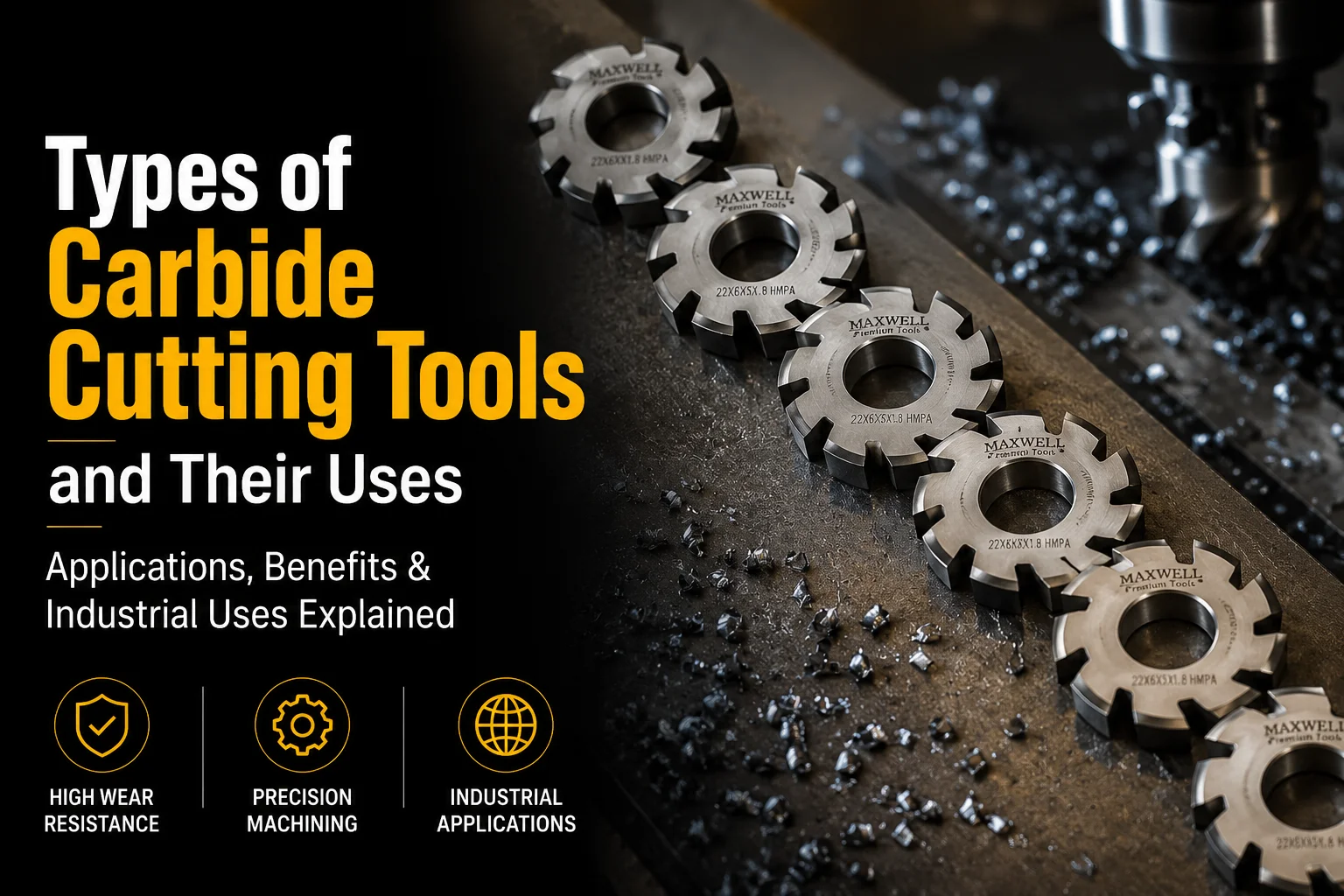
Modern machining depends heavily on tools that can handle pressure, heat, and constant use without losing precision too quickly. That is one reason carbide tools remain common across workshops, factories, and production plants. From metalworking to aerospace manufacturing, these tools help operators cut faster, achieve cleaner finishes, and reduce downtime due to worn edges.
This guide explains the main types of carbide tools, like end milling cutters, where they are commonly used, and how they help improve machining results across different industries.
What Are Carbide Cutting Tools Used For?
Before getting into tool categories, it helps to understand what is carbide used for in machining. Carbide tools mainly help cut, shape, drill, finish, and machine hard materials with better accuracy and longer tool life. Manufacturers use them because they tolerate high temperatures and maintain sharp edges under demanding conditions.
You will commonly see carbide tools used on:
- Stainless steel
- Titanium
- Cast iron
- Aluminium alloys
- Wood composites
- Plastics
- Hardened metals
Many workshops rely on carbide because production moves faster when tools stay sharp longer. That means fewer interruptions for tool changes and less wasted material from rough finishes or inaccurate cuts.
The term carbide cutting tools covers a broad range of products used in milling, drilling, boring, shaping, and finishing operations.
What Are the Different Types of Carbide Tools?
Not every machining task needs the same tool design. Some tools remove large amounts of material quickly, while others focus on detailed work or smooth finishing. Below are some of the most common kinds of cutting tools made with carbide.
Carbide Burrs
Carbide burrs are rotary tools mainly used for shaping, grinding, deburring, and carving materials.
They usually appear in small handheld applications where precision matters more than bulk material removal. Their sharp edges help operators work on detailed areas that larger tools cannot easily reach.
Common uses include:
- Removing rough edges
- Smoothing welds
- Shaping metal surfaces
- Carving patterns
- Cleaning castings
Workshops often use carbide burrs on metal, wood, plastic, and composite materials.
Countersinks
Countersinks create a beveled opening around drilled holes so screws or fasteners sit flush with the surface.
These tools are commonly used in woodworking and metal fabrication because flush fasteners improve appearance and assembly quality. Countersinks also help remove sharp edges left behind after drilling.
Typical applications include:
- Preparing holes for screws
- Deburring drilled openings
- Improving assembly finishes
- Preparing surfaces before tapping
Carbide countersinks usually last longer than standard steel versions when used on harder materials.
Carbide Inserts
Carbide inserts are removable cutting tips mounted onto tool holders. Instead of replacing an entire tool after wear, operators simply swap out the insert. That makes them popular in high-volume machining environments.
You will often find inserts used in:
- Turning operations
- Boring work
- Rough machining
- Heavy material removal
Different insert shapes and coatings suit different materials and cutting conditions.
Some inserts focus on speed, while others prioritize finish quality or durability.
Carbide Drills
Drilling hard materials generates serious heat, which explains why carbide drills remain common in industrial production.
These drills maintain cutting performance longer than traditional alternatives and help create cleaner holes with better accuracy.
Industries such as aerospace and automotive manufacturing regularly use carbide drills because precision is critical in component production.
Common drilling applications include:
- Stainless steel machining
- Cast iron drilling
- Deep-hole drilling
- High-speed production work
Solid carbide drills usually perform especially well during repetitive production cycles.
End Milling Cutters and Their Role in Machining
Among all carbide tooling options, End milling cutters remain among the most widely used in precision machining.
These tools handle several cutting tasks within a single setup, making them highly flexible across different operations.
Machinists commonly use them for:
- Slot cutting
- Surface profiling
- Pocket milling
- Contour shaping
- Precision finishing work
Different flute counts and geometries allow operators to match the cutter to the material being machined.
For example, softer materials often work better with fewer flutes because chips clear more easily. Harder metals may require additional flutes for smoother finishes and stronger edge support.
Many modern milling cutters now use carbide because high-speed machining creates temperatures that quickly wear down weaker materials.
Carbide Reamers
Drilling creates holes, but reamers further improve them. Carbide reamers enlarge holes slightly while improving surface finish and dimensional accuracy. Industries requiring tight tolerances rely heavily on them.
That includes:
- Aerospace manufacturing
- Automotive production
- Precision engineering
- Medical component manufacturing
Reamers help create polished, accurate holes where exact sizing matters. Because carbide resists wear, reamers maintain consistent results over long production runs.
Where Carbide Tools Are Commonly Used
Different industries use carbide tools for completely different reasons.
Metalworking
Metal fabrication shops rely heavily on carbide because many modern alloys are difficult to machine using standard tooling. High temperatures and constant friction wear softer tools down very quickly.
Woodworking
Woodworkers often use carbide-tipped blades and routers because they stay sharp longer when cutting hardwoods and laminated materials.
Aerospace Manufacturing
Aircraft components require extremely tight tolerances and difficult materials like titanium.
Carbide helps manufacturers maintain precision while handling those demanding conditions.
Automotive Production
Factories producing engines, transmission components, and structural parts depend on carbide tooling for speed and repeatability.
Medical Manufacturing
Medical components require smooth finishes and exact dimensions. Carbide tools help manufacturers maintain consistent quality on delicate parts.
Why Machinists Prefer Carbide Tools
The popularity of carbide comes down to practical results inside real production environments.
Here are a few reasons operators continue choosing carbide over traditional alternatives.
Longer Tool Life
Carbide handles wear much better than ordinary steel tooling.
Better Heat Resistance
Machining generates extreme temperatures, especially during high-speed cutting. Carbide tolerates those temperatures more effectively.
Faster Production
Operators can often run carbide tools at higher cutting speeds without sacrificing performance.
Cleaner Finishes
Sharp carbide edges help produce smoother surfaces and more accurate cuts.
Read More: How to Sharpen a Gear Hob for Accurate Involute Profiles
Choosing the Right Tool Matters
Not every carbide tool works equally well for every job.
Several factors affect tool selection, including:
- Material hardness
- Cutting speed
- Desired finish quality
- Production volume
- Machine capability
Using the wrong tool can reduce accuracy, damage surfaces, or shorten tool life unnecessarily.
For example, gear cutters require specific geometries designed for producing gear teeth accurately. Using general-purpose tooling instead would likely create poor results. Understanding the material and machining goal usually helps narrow down the best option much faster.
Read More: Choosing the Right Gear Hobs and Gear Milling Cutters
Final Thoughts
Carbide tooling continues shaping modern manufacturing because it handles demanding machining conditions better than many traditional alternatives. From drills and inserts to reamers and End milling cutters, these tools improve speed, precision, and overall production efficiency across multiple industries.
Explore Maxwell Tools’ wide catalog of carbide based cutting tools for your precision cutting needs. Contact us today to get proper guidance!