
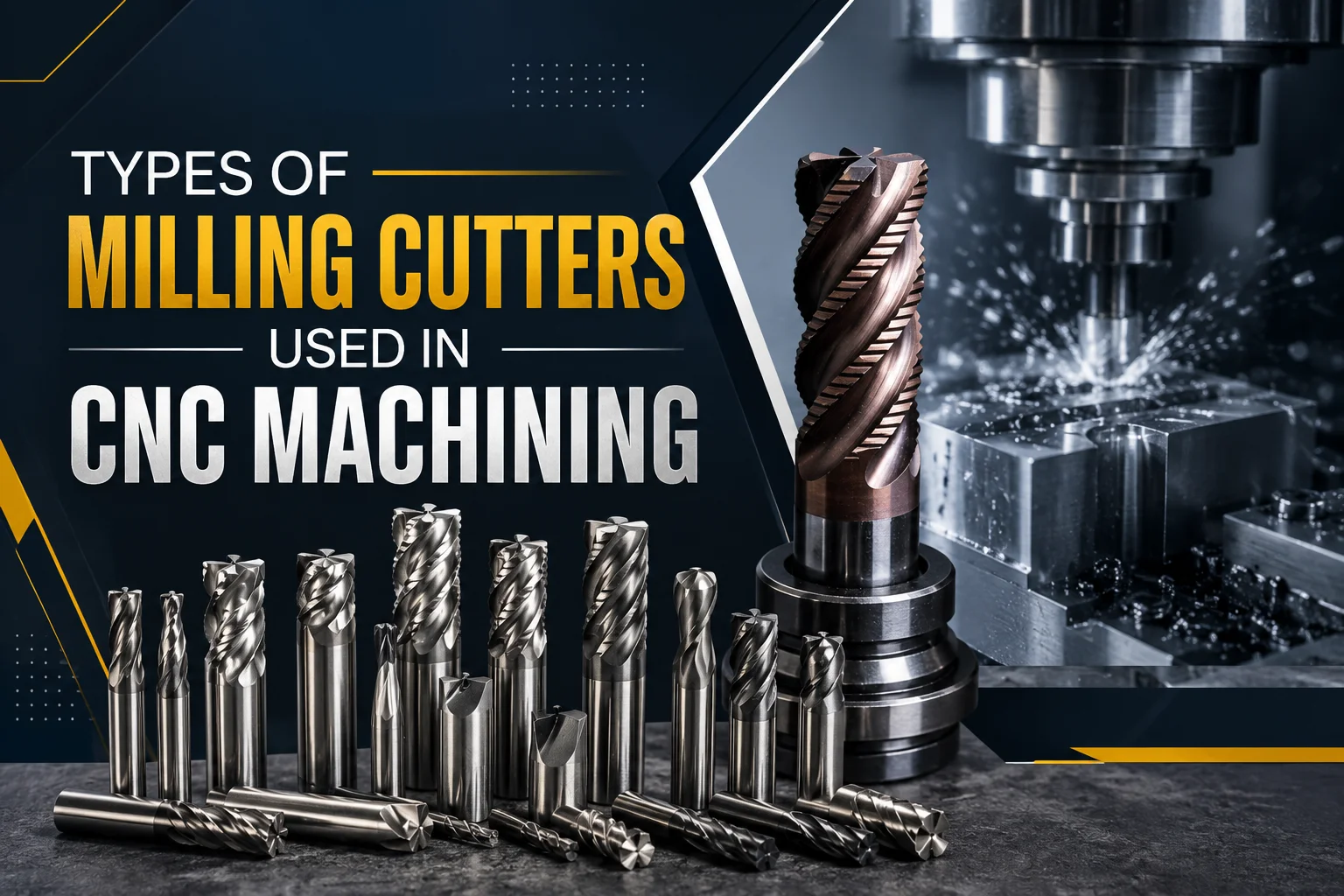
CNC machining depends on cutting tools that match the job correctly. The cutter shape and material all affect the final result. A wrong cutter can slow production or leave rough surfaces. That is why understanding the types of milling cutters used in CNC machining matters for any workshop or manufacturing setup. Different cutters handle different tasks, from rough cutting to detailed finishing work. You also need to know how cutter materials affect performance and tool life. This guide explains common cutter types, industrial milling cutter applications, and simple ways to choose and maintain the right milling tools.
What Is a Milling Cutter?
A milling cutter is a rotating cutting tool used in CNC milling machines. It removes material from metal, plastic, or other workpieces to create shapes and surfaces. These cutters come in different designs for different machining tasks.
Most milling cutters have sharp edges called flutes. These flutes help remove chips during cutting. Some cutters focus on speed, while others focus on precision and surface finish.
The cutter you choose affects machining time and tool wear. CNC machines rely on proper cutter selection to keep production smooth and consistent.
Common Types of Milling Cutters Used in CNC Machining
Different machining jobs need different cutters. Some tools remove heavy material quickly, while others create fine details and smooth finishes. Knowing the purpose of each cutter helps you avoid poor cuts and wasted production time.
The types of milling cutters used in CNC machining also depend on the material being machined. Aluminum, steel, and plastic all react differently during cutting. Here are the most common milling cutters used in CNC workshops today.
1. End Milling Cutters
End milling cutters are widely used because they handle many machining operations. These cutters can move in different directions while cutting. They are useful for small details, pockets, and slots.
Many CNC shops keep multiple end mill sizes for different projects. These cutters work well in manual and automated production setups. They are also available in different flute counts for different cutting conditions.
Here’s what makes end mills useful:
- Used for slot cutting and profiling
- Available in flat, ball nose, and corner radius styles
- Suitable for roughing and finishing operations
- Works on metals, plastics, and composites
End mills are often used for high-precision machining work. Tool coating also improves their cutting performance and durability. Proper feed rates help prevent edge damage and overheating.
2. Face Mills
Face mills are designed for machining large flat surfaces quickly. These cutters use replaceable inserts instead of a single cutting edge. They remove material evenly across wide areas.
Manufacturers often use face mills during the first stage of machining. These cutters help prepare surfaces before detailed finishing begins. They also reduce machining time in high-volume production.
Below are the common uses of face mills:
- Flat surface machining
- Fast material removal
- Smooth surface finishing
- Large workpiece machining
Face mills perform well on steel and cast iron materials. Insert quality affects the final surface finish. Proper machine rigidity also improves cutting stability.
3. Ball Nose Cutters
Ball nose cutters have rounded tips instead of flat ends. They help create curved surfaces and complex shapes. Mold makers and die manufacturers use them often.
These cutters are common in 3D machining operations. They produce smoother curves compared to standard flat-end cutters. CNC programmers also use them for contouring work.
Here’s where ball nose cutters are commonly used:
- Mold and die machining
- 3D contour cutting
- Curved surface finishing
- Detailed cavity machining
Ball nose cutters usually work at slower feed rates. Smaller step-over settings improve surface quality. These cutters also reduce sharp edge marks on finished parts.
4. Slab Mills
Slab mills are heavy-duty cutters used for large surface machining. They are mainly used on horizontal milling machines. These cutters remove thick layers of material quickly.
Industrial workshops use slab mills for large production jobs. Their wide cutting surface helps reduce machining passes. This improves productivity during rough cutting operations.
The following tasks commonly use slab mills:
- Machining large metal plates
- Rough surface cutting
- Heavy stock removal
- Industrial component machining
Slab mills generate high cutting forces during operation. Strong machine setups help reduce vibration. Proper coolant flow also improves cutter life.
5. T-Slot Cutters
T-slot cutters create T-shaped slots in machine components. These slots are often used in fixture tables and workholding setups. Their shape allows undercut machining inside the slot.
These cutters require accurate machine positioning. Even small alignment mistakes can damage the slot shape. CNC operators usually machine a straight slot before using the T-slot cutter.
Here’s how T-slot cutters are typically used:
- Fixture table machining
- Machine bed slot cutting
- Workholding system production
- Industrial assembly components
T-slot cutters work best at controlled cutting speeds. Excessive force can damage the cutter edges. Proper chip removal also keeps the slot clean and accurate.
Industrial Milling Cutter Applications
Milling cutters are used across many industries. Every industry has different cutting needs based on material type and product design. Some applications focus on speed, while others require detailed precision.
Industrial milling cutter applications continue to grow with CNC automation. Manufacturers now use advanced cutters for better efficiency and lower waste. Here are some common industry applications.
1. Automotive Manufacturing
Automotive companies use CNC milling for high-volume production. Many engine and transmission parts require accurate machining. Milling cutters help maintain consistent part quality.
Automotive machining also needs fast production cycles. Strong cutters reduce downtime and improve productivity. Tool coatings are often used for longer cutter life.
Here are common automotive milling tasks:
- Engine block machining
- Brake component production
- Gear housing cutting
- Transmission part finishing
Automotive factories often use carbide cutters for durability. High-speed machining is common in this industry. Surface finish quality also affects final assembly performance.
2. Aerospace Industry
Aerospace parts require tight tolerances and lightweight materials. CNC milling cutters help machines cut aluminum and titanium accurately. Even small machining errors can affect part performance.
Aerospace machining also demands smooth finishes and detailed contours. Ball nose cutters are often used for curved aircraft components. Tool stability matters during deep cutting operations.
Here’s how milling cutters support aerospace production:
- Aircraft frame machining
- Turbine component cutting
- Structural aluminum machining
- Titanium part finishing
Aerospace manufacturers often use coated carbide tools. Heat control is important during machining. Consistent cutter performance helps maintain production quality.
3. Medical Equipment Manufacturing
Medical manufacturers use CNC machining for precision components. Surgical tools and implants require accurate dimensions. Milling cutters help produce clean and smooth surfaces.
Medical machining often involves stainless steel and titanium. Small cutters are common for detailed parts. Surface quality also affects hygiene and product safety.
Below are common medical machining applications:
- Surgical tool production
- Implant machining
- Orthopedic component cutting
- Precision medical parts
Medical machining requires strict quality checks. Sharp cutters reduce burr formation. Consistent machining also lowers product rejection rates.
4. Tool and Die Industry
The tool and die industry depends heavily on CNC milling. Molds and dies require detailed cavity machining and smooth finishes. Ball nose cutters are commonly used for this work.
Toolmakers also use CNC machining for custom production jobs. Fine cutting accuracy matters for mold performance. Surface defects can affect the final molded product.
Here’s where milling cutters help in tool and die work:
- Mold cavity machining
- Die surface finishing
- Prototype tool production
- Precision contour cutting
Tool and die workshops often use multi-axis CNC machines. Small cutters handle detailed shapes better. Proper toolpath programming also improves cutting efficiency.
How to Choose the Right Milling Cutter
Choosing the right cutter improves machining quality and tool life. Different jobs need different cutter shapes and materials. Poor cutter selection can increase production costs.
You should also match the cutter to the machine and workpiece material. Cutter size, coating, and flute count all affect cutting performance. Here are the main factors to consider.
Read More: Types of Carbide Cutting Tools and Their Industrial Uses
1. Workpiece Material
The material being machined affects cutter selection. Soft metals require different cutting tools than hard metals. Some materials also create more heat during machining.
Different cutter materials perform better on specific metals. Carbide cutters handle hard materials well. Softer materials may work fine with HSS cutters.
Here’s what to check when choosing a material type:
- Material hardness
- Heat resistance needs
- Chip formation behavior
- Surface finish requirements
Matching the cutter to the material reduces wear. It also improves cutting speed and accuracy. Proper selection helps avoid broken tools.
2. Surface Finish Requirements
Some jobs require rough cutting only. Others need smooth and polished finishes. The cutter shape affects the final surface quality.
Finishing cutters usually use smaller cutting depths. Ball nose cutters help reduce visible cutter marks. High flute counts also improve finish quality.
Here are important finish-related factors:
- Required surface smoothness
- Tolerance levels
- Cutter edge sharpness
- Step-over settings
Better surface finishes reduce extra polishing work. Consistent cutting also improves part appearance. Correct feed rates help maintain surface quality.
3. Cutting Speed and Machine Power
Machine spindle speed affects cutter performance. High-speed machining requires stronger cutter materials. Machine power also limits cutter size and depth.
Using oversized cutters on low-power machines can cause vibration. Stable cutting improves tool life and part quality. Proper speed settings reduce overheating.
Here’s what to consider for machine capability:
- Spindle speed range
- Machine rigidity
- Cutting depth limits
- Feed rate capacity
Balanced cutting conditions improve production consistency. Proper setup also reduces machine stress. Stable machining protects the cutter edges.
Tips to Extend Milling Cutter Life
Milling cutters wear out over time. Good machining practices help reduce damage and lower replacement costs. Cutter maintenance also improves machining consistency.
Tool life depends on cutting speed, heat, and machine stability. Small setup changes can make a big difference. These tips help your cutters last longer.
1. Use Correct Speeds and Feeds
Incorrect cutting settings create excess heat. This damages the cutter edges quickly. Balanced settings improve chip removal and stability.
Machine manuals often provide recommended cutting data. CNC software also helps calculate proper settings. Operators should adjust speeds based on material type.
Here’s what helps improve cutting conditions:
- Correct spindle speed
- Balanced feed rate
- Proper depth of cut
- Stable chip formation
Good cutting parameters reduce vibration. They also improve surface finish quality. Consistent settings help extend cutter life.
2. Apply Coolant Properly
Coolant helps control cutting temperature. It also removes chips from the cutting area. Excess heat can weaken cutter edges.
Different materials may require different coolant methods. Some jobs use flood coolant, while others use mist systems. Proper coolant flow improves machining stability.
These coolant practices help protect cutters:
- Maintain steady coolant flow
- Keep nozzles clean
- Use a suitable coolant type
- Prevent dry cutting when possible
Coolant also helps reduce the formation of built-up edges. Cleaner cutting conditions improve accuracy. Proper cooling lowers tool replacement frequency.
3. Inspect Tools Regularly
Worn cutters affect part quality and machine performance. Small chips on the cutting edge can grow quickly. Regular inspection helps prevent larger problems.
Operators should check cutters between production cycles. Early replacement prevents damage to expensive workpieces. Visual inspection often catches wear before failure.
Here’s what to inspect regularly:
- Edge wear
- Surface chipping
- Flute damage
- Coating wear
Routine inspection improves production reliability. It also reduces unexpected downtime. Good tool management keeps machining operations efficient.
Read More: Top Milling Cutter Manufacturers & HSS Suppliers 2026
Conclusion
Understanding the types of milling cutters used in CNC machining helps you improve accuracy, cutting speed, and surface finish. Different cutters handle different jobs, and proper selection directly affects production quality. You also need to consider cutter material, machine capability, and maintenance practices before starting any machining operation.
Industrial milling cutter applications continue to expand across automotive, aerospace, medical, and manufacturing industries. Using the right cutter for the job helps reduce waste and improve efficiency over time. Reliable tooling suppliers like Maxwell Tools support machining operations with cutters designed for different industrial needs and machining conditions.
FAQs
1. What are the most common types of milling cutters used in CNC machining?
The most common milling cutters used in CNC machining include end mills, face mills, ball nose cutters, slab mills, and T-slot cutters.
2. Why are carbide milling cutters widely used?
Carbide milling cutters are widely used because they last longer, handle higher cutting speeds, and offer better heat resistance than standard steel cutters.
3. Which milling cutter is best for curved surfaces?
Ball nose cutters are commonly used for machining curved surfaces, complex profiles, and 3D contours because their rounded tip produces smooth finishes.
4. How can you increase milling cutter life?
You can increase milling cutter life by using the correct cutting speeds and feeds, applying coolant properly, minimizing tool vibration, and inspecting or replacing worn tools regularly.